
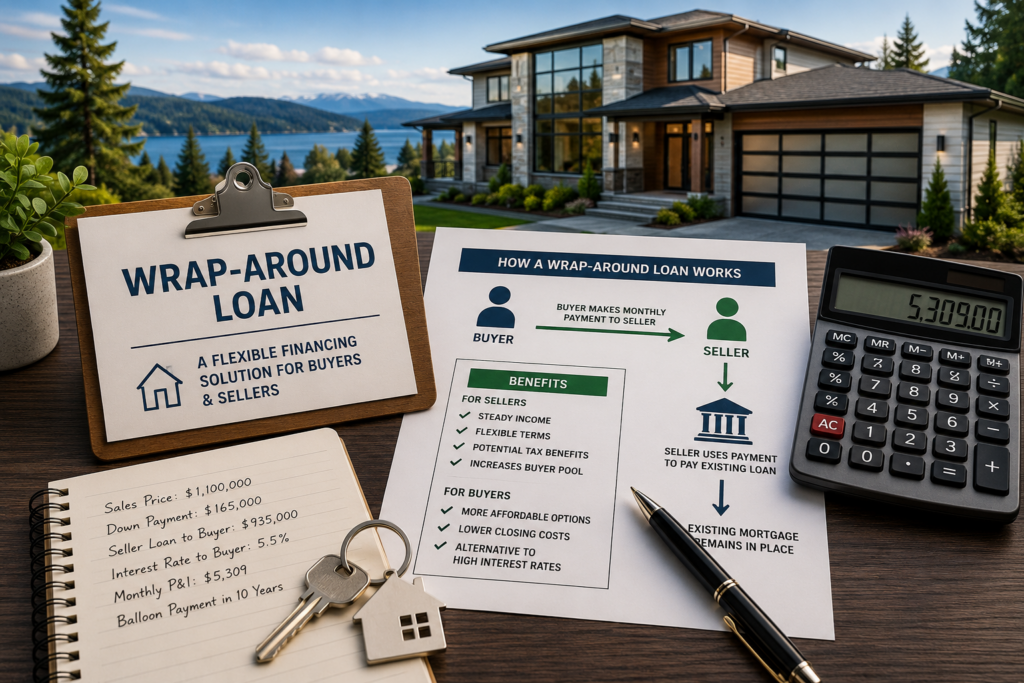
In today’s housing market, higher interest rates have caused many buyers and sellers to look beyond traditional financing. One increasingly discussed strategy is the wrap-around loan, often referred to simply as a “wrap loan.” While not appropriate for every situation, wrap financing can create opportunities for both buyers and sellers when structured correctly.
At Brenner | Hill Real Estate, we believe understanding advanced real estate strategies gives homeowners and buyers more flexibility in changing market conditions.
Wrap-around loans are becoming an increasingly discussed seller
financing strategy as buyers seek alternatives to higher conventional mortgage rates.
What Is a Wrap-Around Loan?
A wrap-around loan is a form of seller financing where the seller keeps their existing mortgage in place while creating a new loan for the buyer. The buyer makes payments directly to the seller, and the seller then uses those funds to continue paying their original mortgage.
Instead of the seller’s existing loan being paid off at closing, the buyer’s financing “wraps around” the seller’s current mortgage balance.
This type of financing can be particularly attractive when the seller already has a low fixed interest rate that would be difficult for buyers to obtain through today’s conventional lending market.
How Does a Wrap-Around Loan Work?
In a traditional real estate transaction, the buyer obtains financing from a conventional lender, and the seller uses the proceeds from the sale to pay off their existing mortgage.
With a wrap-around loan, the process works differently:
- The seller keeps their current mortgage in place.
- The seller finances the buyer directly.
- The buyer makes monthly payments to the seller.
- The seller continues making payments on their existing mortgage.
Typically, the interest rate offered to the buyer is either equal to or higher than the seller’s current mortgage rate. In many cases, a third-party contract collection company is used to help ensure payments are collected and disbursed properly.
Example of a Wrap-Around Loan
Seller’s Existing Loan
- Existing Loan Balance: $537,000
- Interest Rate: 3.5%
- Monthly Principal & Interest Payment: $2,411
New Sale Terms
- Sales Price: $1,100,000
- Buyer Earnest Money Deposit: $15,000
- Buyer Down Payment: $165,000
- Seller-Financed Loan Amount: $935,000
Seller Financing Terms
- Interest Rate: 5.5%
- Monthly Principal & Interest Payment: $5,309
- Balloon Payment Due in 10 Years
Seller Financial Outcome
- Seller Closing Costs: $90,515
- Seller Net at Closing: $76,783
- Estimated Monthly Net Income: $2,898
In this example, the seller benefits from ongoing monthly income while the buyer gains access to financing that may be more favorable than current conventional loan options.
Benefits of a Wrap-Around Loan for Sellers
Wrap financing can create several advantages for sellers:
1. Ongoing Monthly Income
Sellers can generate consistent monthly cash flow without the responsibilities of being a landlord.
2. Potential Tax Advantages
Capital gains may potentially be spread over multiple years rather than recognized all at once. Sellers should always consult with a qualified tax professional regarding their specific situation.
3. Increased Buyer Demand
A lower interest rate compared to current market rates may attract more buyers and potentially increase the home’s marketability.
4. Flexible Terms
Unlike traditional lending, seller financing terms are highly negotiable and can be customized to meet the needs of both parties.
Benefits of a Wrap-Around Loan for Buyers
Buyers may also find wrap financing beneficial in today’s market.
1. Improved Affordability
Wrap loans can help buyers purchase homes that might otherwise be difficult to afford with conventional financing at today’s higher rates.
2. Lower Closing Costs
Because a traditional institutional lender may not be involved, buyers can often avoid many standard lender fees and expenses.
Important Risks and Considerations
While wrap-around loans can offer flexibility, they also involve significant legal and financial considerations.
Many existing mortgages contain a due-on-sale clause, which may allow the lender to demand full repayment if ownership transfers. Buyers and sellers should always consult experienced real estate attorneys, escrow professionals, and qualified tax advisors before entering into a wrap financing agreement.
Proper servicing, documentation, title work, insurance coordination, and legal review are critical to protecting all parties involved.
Is a Wrap-Around Loan Right for You?
Creative financing strategies like wrap-around loans are becoming more relevant as buyers seek affordability solutions and sellers look for ways to maximize property value and income potential.
However, these transactions require careful structuring, strong communication, and experienced professional guidance.
At Brenner | Hill Real Estate, we help buyers and sellers throughout Seattle, Eastside, and Snohomish County navigate both traditional and creative real estate opportunities with a strategic, education-focused approach.
If you are considering seller financing, wrap loans, or other advanced real estate strategies, contact our team to discuss your goals and determine whether this approach may fit your situation.